
Refrigerated or desiccant air dryer: how to choose
Most Québec plants only need a refrigerated dryer. You move up to a desiccant dryer (also called an adsorption or “heatless” dryer) only when the process requires very dry air, when the piping could freeze, or for certain critical applications.
In short:
- Refrigerated dryer: pressure dew point of about +3 °C (ISO 8573-1 class 4). The lowest energy and maintenance cost. For general industry.
- Desiccant dryer (adsorption, heatless): dew point down to −40 °C as standard, −70 °C optional. For demanding processes, cold and outdoor runs. It consumes regeneration air.
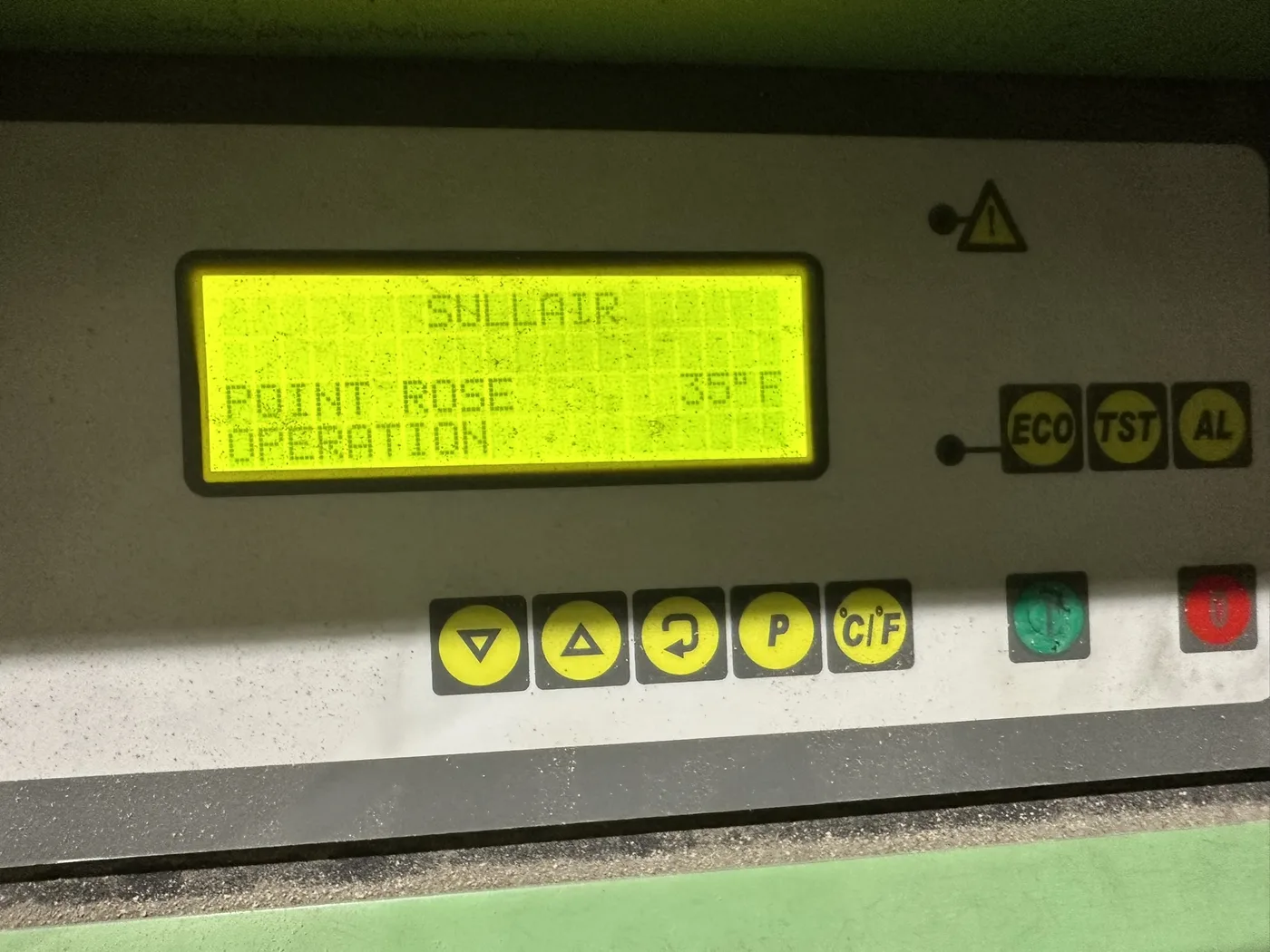
This guide explains the real difference, the decision criteria and the pitfalls, from the point of view of an advisor independent of the brands. The header photo shows a controller reading “POINT ROSE 35 °F” (about 2 °C), the typical dew point of a refrigerated dryer in operation.
The real difference: dew point
A dryer’s job is to lower the pressure dew point of the air: the temperature at which water vapour starts to condense again in the network. The lower that dew point, the drier the air and the less liquid water there is downstream. To fully grasp this idea (and how it differs from the atmospheric dew point), see our article Dew point in compressed air.
It is the starting criterion, because the two technologies do not reach the same dew point:
| Water class (ISO 8573-1) | Pressure dew point | Dryer required |
|---|---|---|
| Class 6 | ≤ +10 °C | Refrigerated |
| Class 5 | ≤ +7 °C | Refrigerated |
| Class 4 | ≤ +3 °C | Refrigerated |
| Class 3 | ≤ −20 °C | Desiccant |
| Class 2 | ≤ −40 °C | Desiccant |
| Class 1 | ≤ −70 °C | Desiccant |
Key point. A refrigerated dryer typically reaches class 4 (+3 °C). It cannot go below freezing, because the water would freeze inside the heat exchanger. As soon as the target dew point drops below freezing (a demanding process, or piping exposed to cold), you need a desiccant dryer. The full class table is in our article Air quality ISO 8573-1.
How a refrigerated dryer works
It cools the compressed air to about +3 °C using a refrigeration circuit. The water vapour condenses, the liquid water is separated and drained off, and the air leaves drier. The principle is simple, reliable and familiar to every refrigeration technician. There is no air loss and no regeneration.
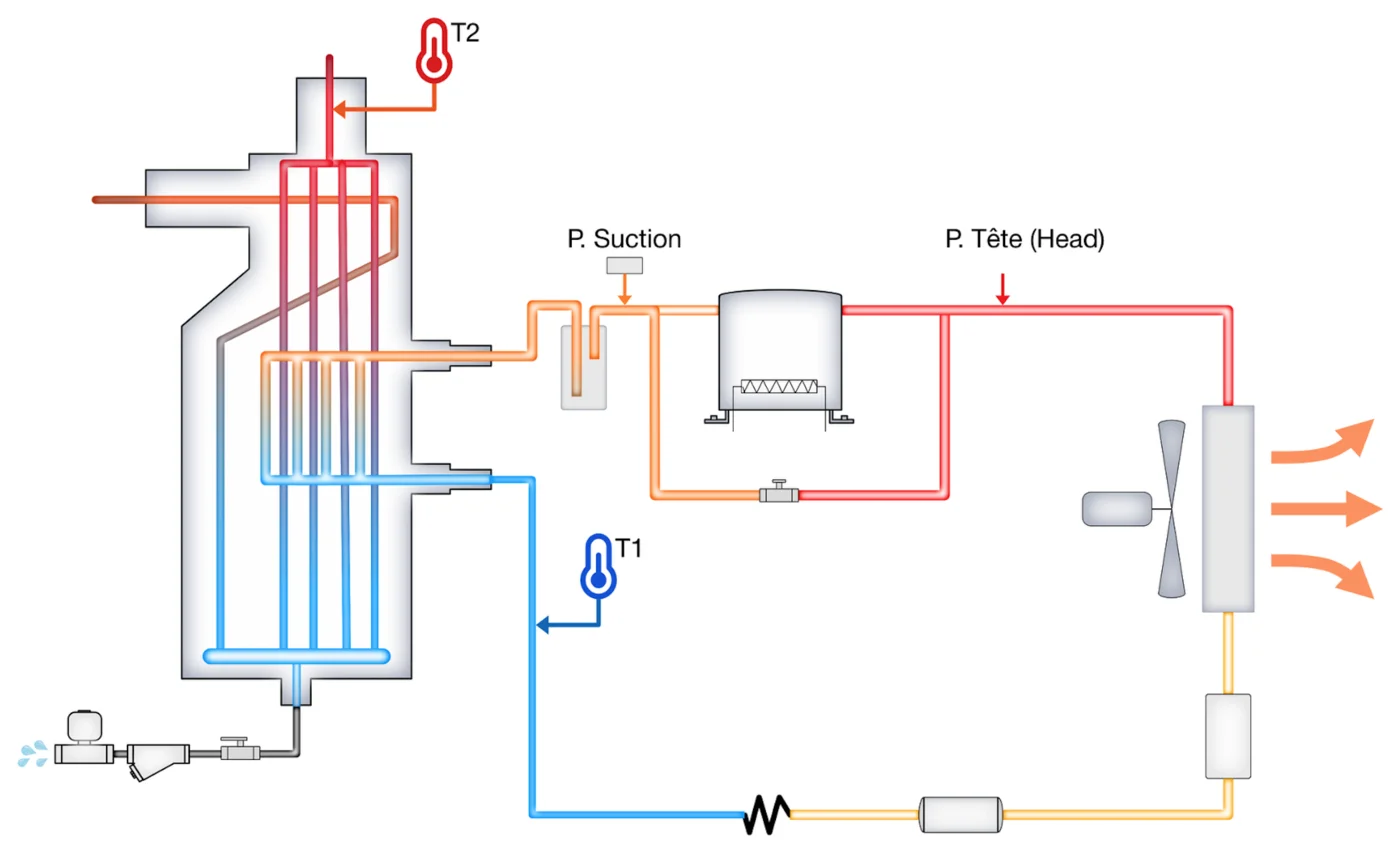
Example in a plant. On an assembly line fed at +3 °C, the air stays dry enough for cylinders and pneumatic tools as long as the piping remains indoors, in the warm. A well-sized refrigerated dryer does all the work, at the lowest operating cost. Selection and sizing details: Choosing a refrigerated dryer.
How a desiccant dryer works (adsorption, heatless)
The air passes over a desiccant material (beads that adsorb water vapour). Two towers work in alternation: while one dries the air, the other regenerates. This is how very low dew points are reached, down to −40 °C as standard and −70 °C optional.
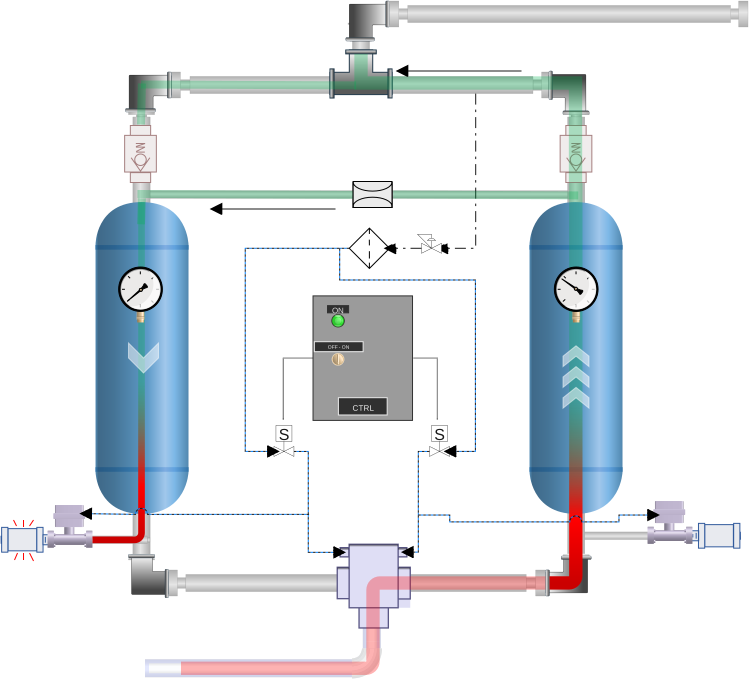
On a heatless dryer, regeneration uses a fraction of the already-dried air: about 15 % of the treated flow at the usual 100 psig and 100 °F conditions (often quoted in a 15–20 % range).¹ This is the main hidden cost of the technology. Heat-assisted variants reduce that regeneration air; the range we offer is heatless.
Important. A desiccant dryer always requires filtration: a coalescing pre-filter upstream, so the desiccant is not flooded with oil, and a particulate post-filter downstream, to retain desiccant dust. See choosing a filter grade.
The comparison table
| Criterion | Refrigerated dryer | Desiccant dryer (adsorption, heatless) |
|---|---|---|
| Dew point | about +3 °C (class 4) | −40 °C standard, −70 °C optional (classes 2 to 1) |
| Energy | the lowest of all dryers | higher (regeneration air) |
| Air loss | none | about 15 % of the treated flow¹ |
| Maintenance | low, serviceable by local refrigeration techs | periodic replacement of desiccant and filters |
| Freezing and outdoors | avoid below 1 °C | suited to cold and outdoor use |
| Purchase cost | lower | higher |
| Applications | general industry | instrumentation, critical processes, cold, outdoors |
When to choose the refrigerated dryer
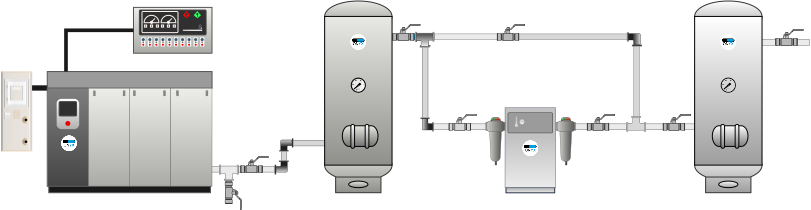
It is the right choice when:
- a dew point of about +3 °C is enough for the process, which covers most workshop and production uses;
- the dryer is installed indoors, in a heated space;
- you are after the lowest total cost (purchase, energy, maintenance).
Examples in a plant. A machine shop feeding cylinders and pneumatic wrenches; a bottling line inside a heated building; a general tooling network in a metal-processing plant. In all these cases, the refrigerated dryer is the most economical to run. Our refrigerated range: Purestream air dryers.
When to move up to the desiccant dryer (adsorption)
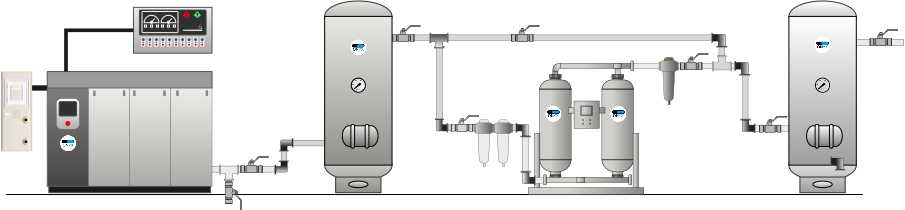
It is justified as soon as one of these conditions applies:
- the process requires a negative dew point. Example: the instrument air of a control room, or the blowing air that dries a powder in food processing;
- the piping runs through a cold environment or outdoors, common in Québec winters. Example: a line that crosses an unheated warehouse or runs along an outside wall; at +3 °C, the water would condense and freeze, blocking valves and drains;
- the application tolerates no trace of water. Example: precision blasting, surface treatment, drying before painting.
Our adsorption range: Walker PRODRY desiccant dryers.
Key point. Don’t pay for a dew point you won’t use. Specifying −40 °C “to be safe” when +3 °C would do means buying a more expensive dryer and permanently wasting about 15 % of your air on regeneration.
Pitfalls to avoid
- Over-specifying the dew point. Aim for the ISO class actually required by the process, not the lowest possible.
- Installing a refrigerated dryer in an unheated space (sawmill, warehouse, job site) or outdoors, where it will freeze.
- Forgetting the filtration around the desiccant dryer. Without a coalescing pre-filter, the desiccant gets contaminated; without a post-filter, dust travels into the network and all the way to the tools.
- Sizing it wrong. Capacity is calculated in SCFM with correction factors (pressure, temperatures, dew point). See Choosing a refrigerated dryer and flow units.
- Neglecting the refrigerated dryer’s pre-filter. Even a refrigerated dryer benefits from being protected by a coalescing pre-filter, for its long-term reliability.
In short
The simple rule: refrigerated by default, desiccant by exception. If the process tolerates +3 °C and everything is indoors in the warm, the refrigerated dryer wins on every cost. As soon as you need a negative dew point, or cold and outdoor runs come into play, the desiccant dryer becomes necessary, never forgetting its filters or its regeneration air.
Tool: dryer selector (coming soon)
We are preparing a guided selector: you enter your flow, your pressure, the target dew point and your environment, and the tool tells you the right technology, model and filtration. In the meantime, send us your case and we will make the selection with you.
Unsure about the right choice? We help, even without a purchase
This is the kind of decision where a mistake costs dearly for 15 years. Our role is first to help you choose right: the right type of dryer, the right dew point and the right filtration, based on your process, your flow and your environment.
This support does not depend on a purchase from our site. Whether you order from us, from your usual supplier or elsewhere, we help you validate your selection, because we are independent of the brands, not the sellers of a single catalogue.
Book a free consultation or compare our ranges: refrigerated dryers and desiccant dryers.
References
- ISO 8573-1:2010, Compressed air, Part 1: contaminants and purity classes (water classes and dew point).
- Compressed Air Best Practices, Regenerative Desiccant Compressed Air Dryers (regeneration air of about 15 % at 100 psig and 100 °F).
- CAGI, Compressed Air and Gas Institute.
- Onyx M3 articles: Dew point, Air quality ISO 8573-1, Choosing a refrigerated dryer, Water in the network.
¹ Source: Compressed Air Best Practices, Regenerative Desiccant Compressed Air Dryers.
Author: Onyx M3 inc., compressed-air experts, independent of the brands. June 2026.